Don’t worry, we’re not going to get too technical on this topic.
Diesel or Electric?
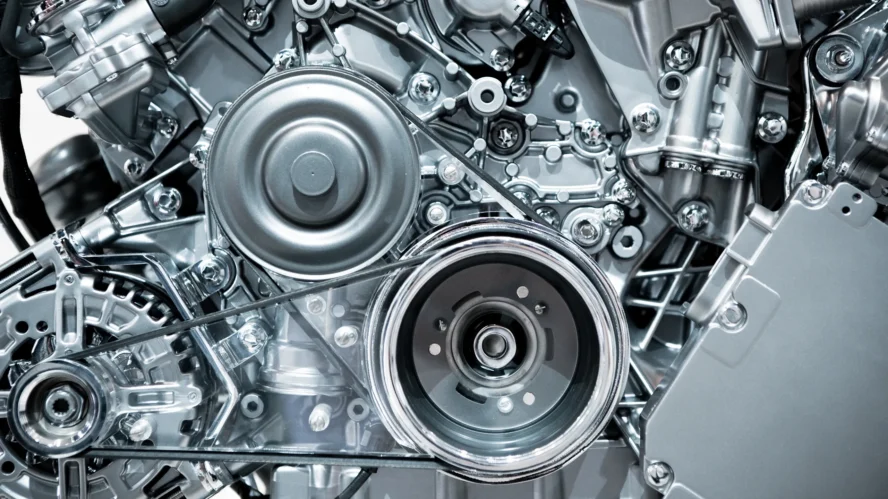
Let’s start with the engine itself. You will have noticed that in recent years that there has been a significant rise in the number of electric vehicles being bought and used on the road. However, this trend has overwhelmingly been on car-sized vehicles and hasn’t yet manifested into larger commercial vehicles such as vans. The difficulty is that the technology is not quite there yet to facilitate a usable range, whilst keeping the vehicle within certain weight limits. For this reason, 99% of all medium-sized vans converted to camper vans will have a diesel engine.
There are a few vans with electric power trains, but the range on these is limited and won’t allow you to use your camper van to its full potential. Even though the government is planning on stopping the sale of combustion engine vehicles in the next 10 years or so, vehicles being bought today are capable of doing well over 250,000 miles and we will be on the road for 20 years or more.
Manual Or Automatic?
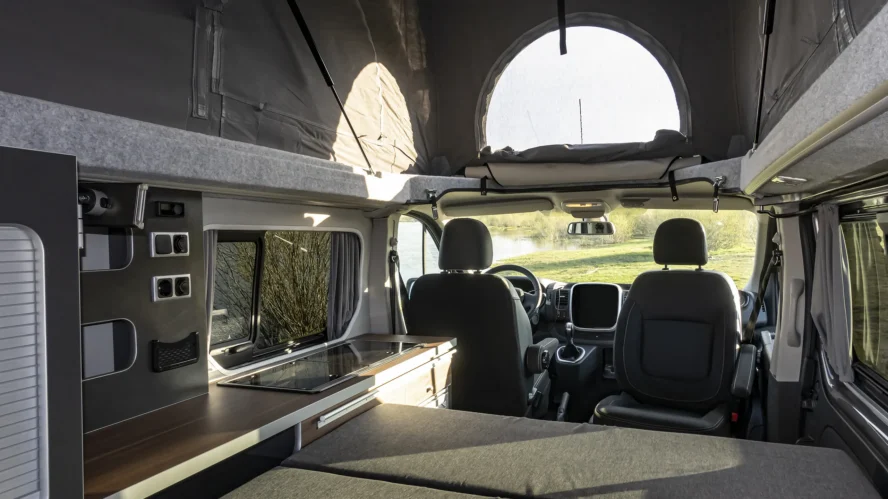
The next question you might ask is whether to go for a manual or automatic gearbox. A number of factors come to play when making this decision. Firstly, and perhaps above all else, it is down to personal preference. More and more modern cars are being sold with automatic gearboxes, and this is now a preference for many people. However, there is still a significant part of the population who enjoy driving a manual, and will continue to do so.
Why the price difference?
The second consideration when deciding between a manual and automatic gearbox, is the cost. It does surprise some people to learn that the purchase of a brand-new automatic vehicle can be significantly more than the purchase of a manual one. For this reason, Camper converters will have to pass this cost onto the consumer. The difference can be as much as £6000 new, and automatic vehicles will always be slightly more expensive than their manual equivalent.
When considering the cost of an automatic van, it’s worth noting that the residual values will also remain strong, which does offset the initial increased cost to some extent. Because of this cost implication, there are also fewer automatic vans to choose from, and therefore the prices will also remain strong for that reason.
What about the engine power?
The other thing to consider when deciding which van to go for is the power of the engine. As an example, the new VW T7 Transporters all have the same 2.0L engine. However, there are many different power variations, and again this is down to personal preference.
As an example, the manual engine might come in a 110 or 150 hp. The automatic gearbox van will be a minimum of 150 hp. There are many other variations but these are among the most popular for mid-sized vans.
Finally, we sometimes get asked about a van with 4×4 drivetrain. These are very rare, primarily because of the upfront cost which is not insignificant. If you are looking for a 4×4 van, used or new, just be aware that your choice will be very limited and you will have to pay more for your van. Sometimes this increased cost, and reduced choice, well outweigh the desire for a 4×4 vehicle.