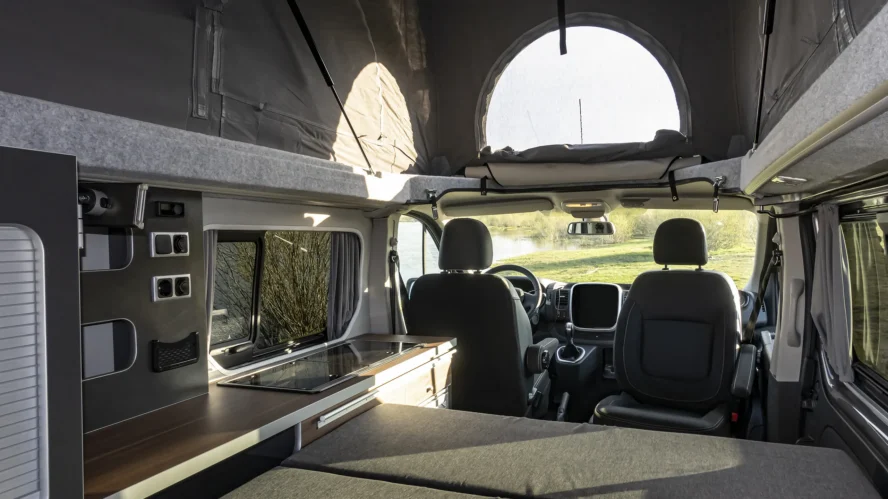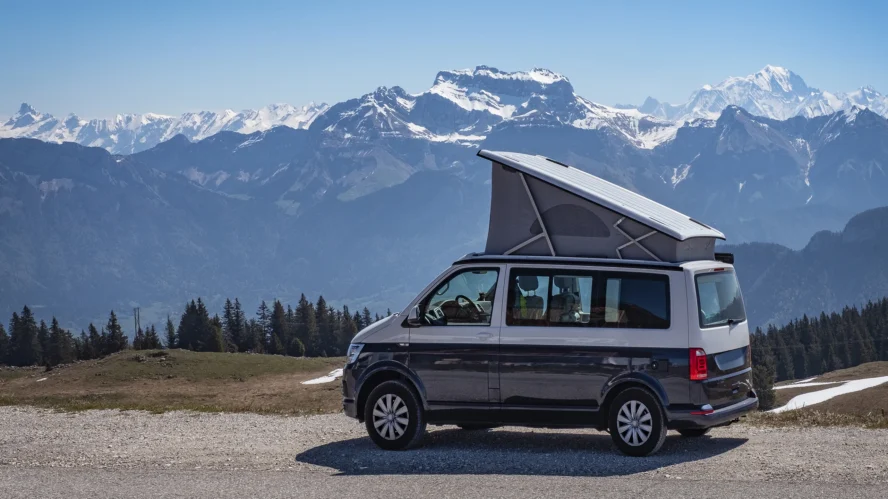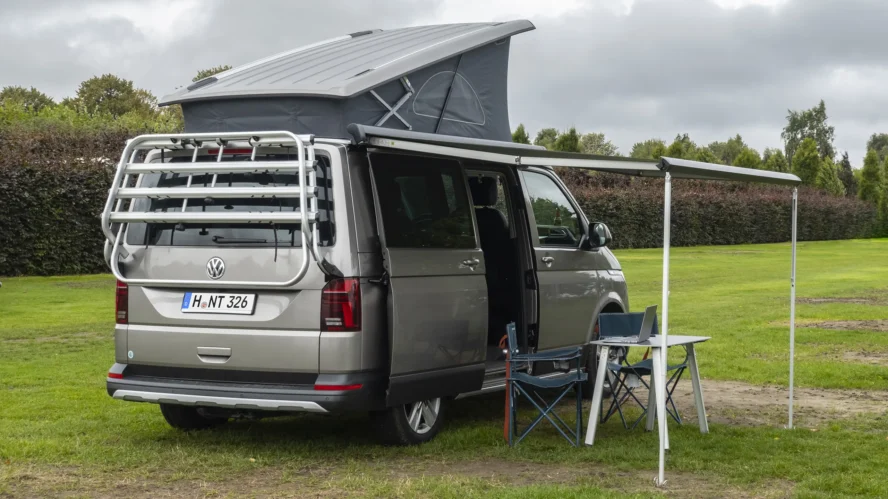
Customising a VW campervan involves taking a stock model – usually a Transporter – and turning it into a small, self-contained home on wheels that’s tailored to how you prefer to travel. Instead of accepting an off‑the‑shelf camper, you can choose things like how many people it seats, layout, how it works for everyday use, and how capable it is off‑grid trips.
You’re in good company. According to data published by the National Caravan Council (NCC), UK motorhome registrations reached over 16,000 in 2025, the highest annual total recorded in the last 25 years.
As you read on, we’ll help you work out whether a VW camper genuinely fits your life, explore sensible ways to buy and build one, and highlight the key decisions and checks that keep the process enjoyable rather than stressful. The aim is to give you qualified, honest and practical advice, so you can move forward with confidence.
Is a custom VW campervan right for you?
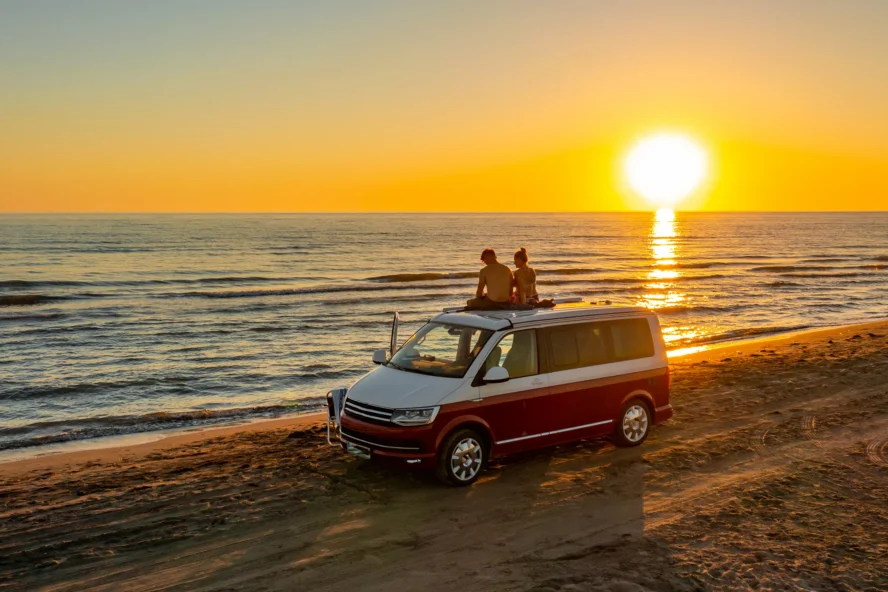
Owning a VW campervan can be genuinely life‑shifting. Friday evenings turned into impromptu coastal escapes, long summer road trips with your own bed and kettle, and everyday errands that feel more like mini adventures. But it also means living around a compact space and a bit more planning when it comes to parking, storage and packing.
“To travel is to live.”
— Hans Christian Andersen
Before you get too deep into choosing paint colours and pop‑tops, it’s worth pausing to picture your real life in one of these vans. How often will you actually get away? Who will come with you? How do you cope with shared, small spaces and a bit of organisational chaos?
| Key Takeaways | |
|---|---|
| How do you plan to use your campervan | How you plan to use your van determines the fit-out requirements. |
| Daily driver or adventure vehicle | A smaller campervan is easier to drive and park every day, but larger vans provide more living space. |
| Sleeping, storage and space needs | Consider who, what and where. Space is at a premium – consider what is essential vs nice to have. |
| Campervan vs Motorhome | Motorhomes win on facilities; however, for drivability, access and avoiding potential campsite restrictions, smaller vans can be better suited. |
How do you plan to use your campervan?
Start with considering the trips you can realistically see yourself taking. Short weekend breaks, UK only campsites or festivals put different demands on a van than month‑long European road trips or winter hill‑walking adventures.
Think about where you’ll go, how long you’ll be away at a time, what the weather is usually like and what sort of roads you’ll be driving. Will you be truly off grid for long periods of time, or hooked up to camp site facilities? Matching customisation options with intended use is the key to a happy van life.
Size matters – daily driver or adventure vehicle (or both?)
One of the biggest early decisions is whether your camper will replace a car as a daily driver or be kept mainly for trips. A short wheelbase VW Transporter is actually shorter than a new BMW 5 Series Touring, so it absolutely can be used as a daily vehicle. You then have a van that does school runs, commuting and supermarket visits, which is easy to park and is comfortable in traffic.
For those planning longer trips, larger vans are of course worth considering. The additional living space, storage and flexibility can make life on the road more comfortable. That said, VW campervans are surprisingly versatile and, with the right layout and customisation, can comfortably support everything from weekend breaks to extended adventures.
Sleeping, storage and space needs
Think about exactly who and what needs to fit inside your van. Count regular travellers (adults, kids, pets) and anyone who might occasionally join, then think through where each person will sit on the move and sleep at night.
Consider the gear you carry most often (bikes, boards, hiking kit, prams, tents) – and ask which of those really needs to live inside the van versus in a roof box, trailer or drive‑away awning. Just as important is working out what you don’t need to take with you. A light, uncluttered van often leads to a more liberating holiday.
Is a VW campervan better than a traditional motorhome for you?
Motorhomes generally win on facilities such as a toilet and shower. However, although larger on the outside than a campervan, they don’t necessarily feel bigger on the inside, due to the washroom and fixed bed taking up much of the extra space.
Larger motorhomes may be less suited to some destinations. Campsite pitch sizes vary considerably across the UK and Europe, and some sites impose vehicle length restrictions. Larger vehicles may also find access more challenging on narrow roads, in historic towns and at certain tourist locations.
A VW Transporter-sized vehicle sits at the other end of the scale: more agile to drive, easier to park, fits on your driveway, and cheaper to run, but with perhaps tighter living space and more set‑up and pack‑down.
Choosing the right base vehicle for conversion
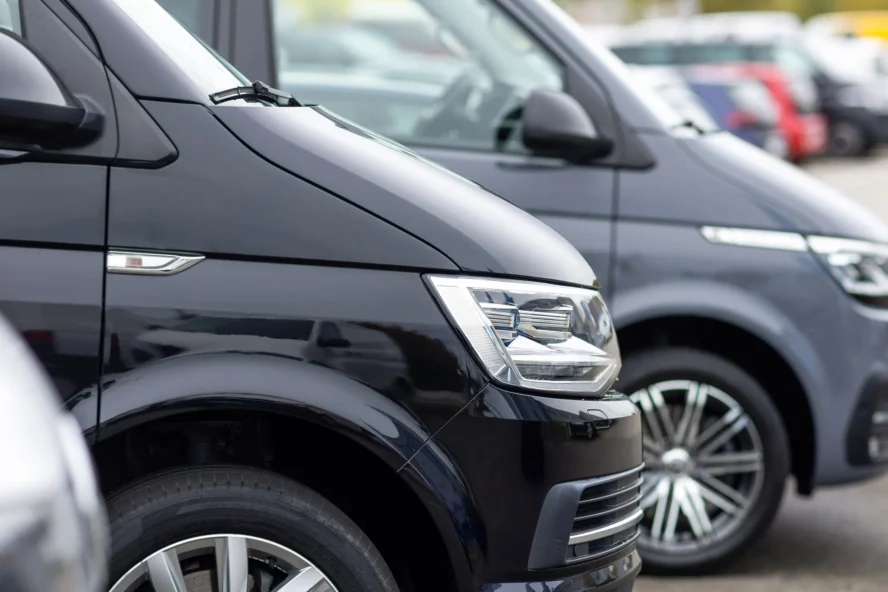
The base van you choose is the foundation for everything that follows. Most custom builds use a VW Transporter base, but there are also smaller and larger VW options, plus older models that appeal to some owners for their charm rather than practicality.
Broadly, newer and larger vans cost more to buy but tend to feel more refined on long journeys and may come with better safety tech. Older or smaller base vans can be cheaper, but you’ll usually accept more basic cabins, fewer creature comforts and sometimes higher maintenance expectations.
| Key Takeaways | |
|---|---|
| VW Transporter T5, T6 or T7 | Each model builds on the previous with improved technology, comfort and safety features. |
| Other VW camper options | Each alternative offers different trade-offs in space, convenience and practicality. |
| Short wheelbase vs long wheelbase | A long wheelbase provides more internal space at the expense of manoeuvrability. |
| 2WD or 4WD (VW 4Motion) | 2WD suits most owners on tarmac and maintained roads, while 4WD handles tougher conditions but costs more. |
| Choosing the right engine type | Petrol and electric are options, but diesel remains the preferred choice. |
VW Transporter T5, T6 & T7 – key differences
To decode these numbers, simply think of them as each one being an updated version of the number before it. The T5 dates from 2003, and the latest T7 from 2025. From a camper buyer’s point of view, the Transporter generations form a spectrum from older and more affordable, to newer but more refined and more expensive.
Earlier models typically give you a slightly more basic driving experience and fewer in‑cab comforts, but can sit in lower price bands, making them attractive if you’d rather put more of your budget into the conversion itself.
Later versions tend to feel quieter and smoother on long runs, with more modern tech and safety features, which many owners appreciate when they’re covering big holiday mileages.
Other VW camper options (Caddy, Crafter and classics)
Beyond the Transporter, VW’s range includes smaller vans like the Caddy, larger ones like the Crafter, and older “classic” models that have strong visual character.
- Caddy based campers suit people who travel light, want something very compact and car‑like, and are happy with minimal interior space.
- Crafters offer much more room for fixed beds, bathrooms and storage, but feel more like small motorhomes and are less convenient as everyday vehicles.
- Classic VW campers suit enthusiasts who value character and nostalgia, and are willing to trade modern comfort and practicality for a more iconic driving experience.
Short wheelbase vs long wheelbase
For vans, short wheelbase (SWB) and long wheelbase (LWB) refer to the distance between the front and rear axles, which in simple terms – is how long the van is. The difference is around 40cm – this may not sound like much but can represent a big difference in terms of interior space.
A SWB is easier to manoeuvre, fits more comfortably into standard parking bays and can feel less intimidating if you’re used to driving cars. The trade‑off is less interior length for living area and storage. A bed on sliding rails can make a SWB van feel every bit as large inside as a LWB – worth considering for all the advantages of a SWB van.
2WD or 4WD (VW 4Motion)
Choosing between 2WD and VW’s 4Motion all‑wheel drive is largely about where you plan to take the van and how confident you want to feel when conditions are poor. For 99% of van users, staying on mostly tarmac touring and mainstream campsites, a standard 2WD Transporter is usually ample and keeps both purchase price and running costs down.
4WD vans are relatively rare, and often significantly more expensive. For this reason, it’s a decision not to be taken lightly. If your trips often involve wet fields, rough tracks, snow‑prone regions or remote parking spots, the extra traction and peace of mind from 4Motion can be worth the added complexity and cost.
Choosing the right engine type
Engine choice shapes how relaxed the camper feels on longer journeys, how happy it is with stop‑start urban use and how it fits with emissions rules and fuel costs over time. By far the most popular choice of engine for a campervan is still the diesel.
Diesel engines balance torque for hills and motorways with respectable economy, making them popular for touring. When looked after, these engines can run for over 200k miles, and many are on the road 30 years later.
Electric-powered vans still have the issue of range and charging – some vans still only have a limited range. An electric vehicle for local journeys works fine, but when touring in a campervan, you will need the range to go off the beaten track and not worry about running out of power.
Buying new, second-hand or ordering custom conversion
You can get into campervan ownership in three main ways: buying a new off-the-shelf campervan, purchasing a pre-owned model, or commissioning a custom conversion built to your requirements. Each option offers a different balance of cost, convenience and personalisation.

| Key Takeaways | |
|---|---|
| New off-the-shelf campervans | Higher purchase price but supplied with warranties, modern features and ready to drive away. |
| Pre-owned model | Lower cost and ready to drive away, but you inherit someone else’s choices and an older van. |
| Commissioning a custom conversion | Longer lead time but complete control over the layout, materials and styling. |
Buying a new off-the-shelf VW campervan
In this context, a “off-the-shelf ” VW camper usually means either a factory‑built model or a specialist conversion built to main dealer standards. The big attractions are clear: manufacturer and converter warranties, the latest safety and infotainment tech, and the reassurance that no one else has lived in the interior.
Prices are naturally higher and customisation options are limited to pre-configured options. Lead times are longer if not buying specific models available on the forecourt.
Buying a second-hand VW camper
Buying a second‑hand is often the quickest and cheapest way to get on the road. There’s no waiting for build slots or design decisions and there is a huge variety of layouts, styles and price points to choose from.
As the previous use is unknown, service history and dealer warranty is essential in order protect your investment.
Commissioning a custom conversion on a base van
Commissioning a custom conversion means sourcing a suitable VW base van and then working with a converter to design and build the interior around your needs. Typically, you’ll choose or approve the donor vehicle, agree a layout and feature list, refine colours and materials, then wait while the workshop turns plans into reality before a final handover and snagging stage.
This route best suits people with fairly clear expectations about quality and layout, or those with specific needs that off‑the‑shelf campers don’t meet, and who are comfortable managing more decisions, a longer timeline and a more involved payment schedule in return for a tailored result.
Setting a realistic budget for a custom VW campervan
Along with the as well as the initial purchase investment, a campervan can be a significant ongoing financial commitment, There’s the cost of the base van and conversion itself, plus outgoings such as insurance, tax, fuel, servicing, repairs, campsite fees and storage to consider.
A van that transforms your weekends and replaces other holiday spending might justify a higher budget than one that only leaves the driveway a few times a year.
Thinking in terms of an all‑in budget over several years, rather than just the build price, will give you a far clearer picture of what you’re taking on. It can help to work back from how often and how intensely you expect to use the camper and match

| Key Takeaways | |
|---|---|
| VW base van and conversion cost | Expect to invest around £55,000–£75,000, with base van specification significantly affecting the final cost. |
| Finance, insurance and running costs | Custom campervans typically cost more to finance, insure, maintain and run than standard passenger vehicles. |
| Do Volkswagen campervans hold their value? | VW campervans generally retain their value well, especially desirable models with sought-after conversions. |
How much does a VW base van and conversion cost?
The overall price of a custom VW camper is a combination of what you pay for the base van and what you invest in the conversion. As a general guide, expect to invest around £55,000 – £75,000 for a quality new custom VW campervan.
Newer, higher‑spec vans and larger or more powerful models usually cost more upfront but may feel nicer to live with and hold their value better. Choosing an older or higher‑mileage base van can bring the entry point down but can leave less headroom for conversion spend once you’ve allowed for any mechanical work and long term maintenance.
Finance, insurance and ongoing running costs
People fund custom campers in different ways – some save and pay outright; others use personal loans or vehicle finance products to spread the cost. It’s worth being honest about what level of monthly commitment feels comfortable before you start firming up plans with a converter.
Covered later in this guide, campervans require specialist insurance, so it’s important to factor this into your budget from the outset. You should also consider ongoing servicing, maintenance and the upkeep of conversion components, which can increase ownership costs compared with a standard passenger vehicle.
Do Volkswagen campervans hold their value?
Volkswagen campervans have a reputation for holding their value relatively well -especially when they’re based on desirable models, colour choices, converted by respected firms and kept in clean, well‑maintained condition.
It’s still better to think in terms of reducing the long‑term cost of ownership rather than expecting a guaranteed “investment” but factoring likely resale value into your upfront decisions can help justify increased budget choices – such as a better base van or more reputable converter.
Planning your ideal VW campervan layout & features
With your base van and budget determined, the next step is turning your lifestyle ideas into a clear layout and feature brief. This means deciding who and what the van must accommodate, what kinds of trips it needs to handle, and which comforts are genuinely non‑negotiable versus nice‑to‑have.
Getting priorities down on paper early helps keep the design focused and stops the wish list quietly expanding until it blows the budget or delays the build.
Think of the layout as a series of linked choices rather than a menu to tick everything from. Space given to extra seats can’t also be used for storage; a big, fixed bed might mean less daytime living area; a full cooker and bathroom setup will eat into weight, cost and cupboards.
| Key Takeaways | |
|---|---|
| Campervan layout basics | Seat numbers, sleeping arrangements and storage are the primary factors influencing the layout. |
| Pop-top vs high-top camper roofs | Pop-tops are the most versatile option but sacrifice permanent headroom and storage. |
| Campervan sleeping, kitchen and bathroom choices | Every layout involves compromises, with onboard toilets rarely practical in mid-sized vans. |
| Campervan electrics, heating and off-grid capability | Electrical and heating systems shape the camping experience, while true off-grid setups require specialist design. |
| Insulation, comfort and interior finishes | Insulation value is limited for smaller vans. Carpeting and interion finish provide a better living experience. |
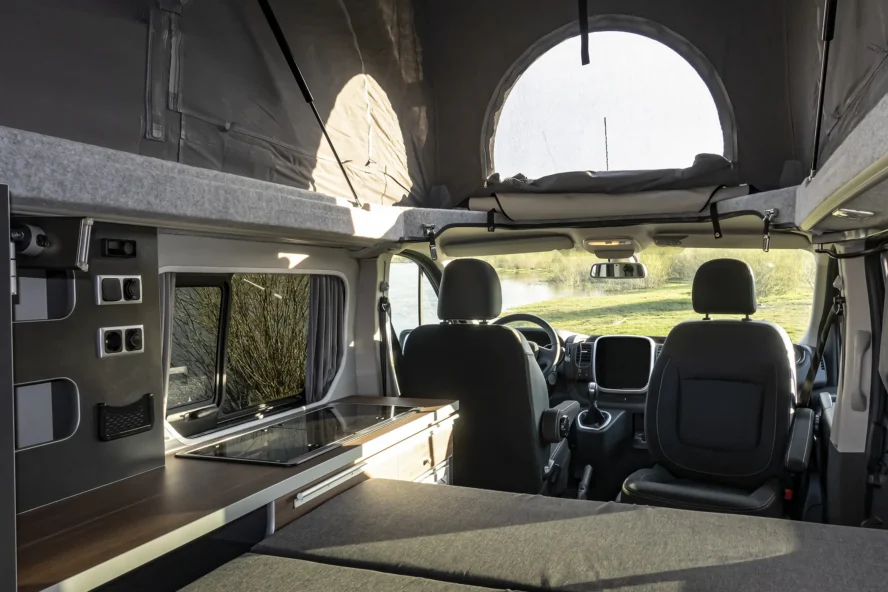
Campervan Layout basics: people, gear and space
At the heart of any campervan layout are three questions:
- How many belted seats you need while driving?
- How and where everyone will sleep?
- How much open floor and storage space you want to retain?
Families often prioritise extra travel seats and pop‑top beds, while couples might lean toward a more spacious lounge area or a wider, comfier main bed. Smaller van ownership means you must be efficient with your layout design.
Hobbies, sports gear and any mobility or accessibility needs will all influence where big storage zones should sit and how easy it is to move around inside when the weather keeps you indoors.
Pop-top vs high-top camper roofs
The choice between a pop‑top and a high‑top roof has a big impact on how the camper looks and behaves as well as how it feels to live in.
Pop‑tops: (where the roof ‘flips up’) give you standing headroom and often extra sleeping space when raised, but keep the van low and discreet when closed, which helps with height‑restricted parking and reduces the sense of driving something bulky. These are overwhelmingly the most common kind of roof on a converted VW camper.
High‑tops: are far less common, and provide permanent headroom, extra insulation and useful overhead storage. The flip-side is the cost of increased overall height, more windage and a more obviously “camper” appearance, which may or may not suit where you plan to park and store the van.
Campervan sleeping, kitchen and bathroom choices
Sleeping, cooking and basic bathroom choices quickly define how self‑contained your camper feels. Bed options range from rock‑and‑roll seats that fold flat through to dedicated fixed beds or pop‑top bunks; cookers can be simple single burners, full‑width hobs or portable units used outside; and fridges come in different sizes and efficiencies.
For bathrooms, most people are happy with campsite facilities and a portable toilet in a cupboard, while others want indoor washing options, even in a compact space. Very few Transporter-sized vans will have built-in toilet facilities, as this greatly reduces the usability of the interior space.
Campervan Electrics, heating and off-grid capability
The electrical and heating systems are what make a camper comfortable rather than just a bed in a van. A typical setup uses one or more leisure batteries to power lights, fridge, water pumps and charging sockets. Charged from the engine while driving, from mains hook‑up on campsites or from roof‑mounted solar panels.
Many owners add a night heater so the van stays warm in cooler weather without needing to run the engine, which can dramatically extend the usable season.
If looking at a fully ‘off-grid’ campervan, you need to ask exactly what that means in terms of actual everyday use. You will have a mix of 12v power, 240v power (the same as your household plugs), and possibly also gas. Ask your campervan supplier exactly what power options you have and how they are replenished (e.g. solar, and charging from driving).
Insulation, comfort and interior finishes
It surprises many people to learn that most mid-sized campervans do not have added insulation. The downside of thick insulation is that it holds moisture and takes up valuable space. When you factor in windows, furniture etc, there are not a great many panels which can be insulated in any case.
Good carpet lining, a heating system and ventilation are what turn a bare van shell into a space that feels cosy, quiet and pleasant to spend time in. Carpeting or lining boards soften noise and improve the overall feel.
Decent windows, roof vents and opening sections help control condensation and fresh air, and the quality of trims, seals and finishes will affect not just first impressions but how robust and rattle‑free the interior feels after years of use.
Choosing a reputable VW campervan conversion company
A reputable, experienced VW conversion specialist is more likely to deliver safe, durable work, clear communication and sensible advice when you’re weighing options. Chasing the cheapest quote can sometimes mean cut corners, poor aftercare and headaches that are hard to fix once the van is built.
It’s worth taking time to build a shortlist:
- Ask for recommendations
- Read independent reviews
- Visit shows to see builds in person
- Drop into workshops to get a feel for how they operate
Pay attention to how open they are about their processes, costs and timescales, how organised the workshop looks and whether their previous projects match the quality and style you have in mind.

| Key Takeaways | |
|---|---|
| Questions to ask a converter | Look beyond price and lead times for evidence of platform expertise and a structured conversion process. |
| Safety standards, approvals and insurance | A reputable converter should clearly explain safety standards, compliance and insurance considerations. |
| Warranties, aftercare and long-term support | Choose a converter offering clear written warranties, guarantees and proven aftercare support. |
Questions to ask a potential campervan converter
When you speak to potential converters, go beyond price and timescales and ask about their experience, typical projects and how they build vans. It’s reasonable to ask how long they’ve been working with VW platforms, what proportion of their work is full conversions versus smaller jobs, and whether you can see finished vans or talk to past customers.
Clear, confident answers and pride in previous work are reassuring; vague responses or reluctance to share examples are not.
Disclosure of safety standards, approvals and insurance-friendliness
Professional converters should be able to talk plainly about the safety and quality standards they work to. That includes having suitably qualified people handle gas and electrical installations, using seating and bed systems that are designed and tested for use in moving vehicles, and following any relevant approvals or best‑practice guidelines for structural changes.
More importantly, there are government standards on safety for important elements of the builds such as the roof and the rear seats. These standards aren’t just box‑ticking -they affect how well the van protects you in a crash, how safe it is from fire or fumes, and how straightforward it is to insure.
Warranties, aftercare and long-term support
A solid conversion should be backed by clear, written warranties that explain what’s covered, for how long and how any issues will be put right. Ideally this covers both the conversion work itself and, where applicable, any guarantees still in place on the base vehicle.
Importantly, check independent reviews of your chosen supplier, and see how well they look after their customers – how quickly they aim to resolve problems and whether past clients feel supported over the long term. It’s worth asking how snagging – the small fixes that often crop up after a few trips – is handled.
Legal, safety and insurance essentials for custom VW campers
It’s easy to get excited and focus on colours and clever storage, but the legal and safety side of a camper is just as important. A campervan should be structurally sound, have safe gas and electrical systems, and meet all roadworthiness standards. On top of that, it needs to be correctly described on its paperwork and insured for how it’s intended use.
None of this needs to be intimidating. Working with a knowledgeable converter, keeping hold of certificates and invoices, and making sure the vehicle’s registration details and insurance match its real‑world spec will make day‑to‑day ownership much simpler.
| Key Takeaways | |
|---|---|
| Gas and electrical safety | Professional installation is essential, with systems designed and fitted to recognised safety standards. |
| Vehicle classification, tax and DVLA | Many campervan conversions retain their original vehicle classification for registration and taxation. |
| Insurance for custom campervans | Use a specialist insurer and accurately declare all conversion work and intended vehicle use. |
Gas and electrical safety
Any camper conversion should meet some basic safety principles:
- Gas systems need to be properly installed, securely mounted and ventilated so leaks are unlikely and, if they do occur, can dissipate safely.
- Electrical wiring should be appropriately sized, fused and protected, with components fitted in a way that resists chafing, damp and accidental damage.
- Inside the van there should be enough airflow to manage fumes from cooking and heaters, as well as to control condensation over time.
Vehicle classification, tax and DVLA considerations
Converting a van into a campervan does not automatically mean the DVLA will change the body type shown on the V5C. Many professionally converted campervans remain registered as a ‘van with windows’ or similar body type because the DVLA only changes the classification where both the interior and exterior meet its motor caravan criteria.
This administrative body type does not necessarily determine how the vehicle is insured, taxed or used, although these should always be confirmed based on your individual vehicle and circumstances.
Insurance for custom VW campervans
Custom campers often don’t fit neatly into standard car insurance categories, which is why many owners turn to specialist campervan insurers. Specialist insurers will understand the conversion you have had done and will be able to insure the van for its correct use and value.
These providers usually want to know exactly what the base vehicle is, who carried out the conversion, what modifications have been made and how the van will be used – including annual mileage, where it’s stored and any added security.
Being open and accurate about these points helps avoid problems if you ever need to claim and can also keep premiums more realistic by matching the policy to the van’s true value and risk profile.
Checking a campervan before you buy
Viewing a promising VW camper can be exciting, but it pays to slow down and look at it with a clear, methodical eye. Treat this stage as your chance to prove the van deserves your money, using mechanical checks, a close look at the conversion and, where sensible, professional help to back up your instincts.
Taking a checklist, allowing plenty of time and, where possible, bringing along someone knowledgeable can make a big difference. If anything feels off – from the way the van drives to gaps in the paperwork or a seller’s attitude – it’s almost always better to walk away and keep looking than to hope for the best.

| Key Takeaways | |
|---|---|
| Base van mechanical and bodywork checks | Check for rust, accident damage, tyre wear and overall engine condition before buying. |
| Inspecting the quality of the conversion | Look for evidence of professional workmanship, including tidy cable and pipe routing. |
| Professional inspections, paperwork and red flags | An independent inspection can prevent costly mistakes. Be cautious of missing paperwork or unusually low prices. |
Base van mechanical and bodywork checks
Start with the fundamentals of the base van itself. Look for a consistent service history and MOT record that match the stated mileage and usage and be cautious if paperwork is thin or stories don’t quite add up.
Walk around the bodywork checking for obvious rust, particularly on known rust‑prone areas, as well as mismatched paint, poorly aligned panels or signs of accident repairs. Tyres, brakes and suspension should look and feel in good condition, and the engine bay should be free from obvious leaks or improvised fixes.
Inspecting the quality of the conversion
Once you’re happy the base van seems sound, turn your attention to the conversion itself. Inside, look closely at the fit and finish of furniture, trims and flooring: clean, straight lines, secure fixings and neatly finished edges are good signs, while rough cuts, sharp edges or wobbly cupboards suggest rushed work.
Peer into cupboards and under seats to inspect how wiring, plumbing and gas pipes are routed and protected; tidy, labelled runs and proper clips are reassuring, whereas tangled cables or unprotected pipes are not.
Professional inspections, paperwork and red flags
Even if you’re reasonably handy, there’s real value in backing up your own checks with professional help, especially on higher‑value vans. A mechanical inspection or diagnostic scan can reveal issues that aren’t obvious on a short test drive, and history checks help confirm that the vehicle isn’t stolen, written off or subject to finance you don’t know about.
Pay close attention to red flags in adverts or viewings: very low prices compared with similar vans, vague or missing paperwork, heavy rust, inconsistent explanations or any reluctance to let you inspect the van properly or get an independent check.
Timing your purchase and managing the process
Unless buying off the forecourt, buying a custom camper rarely happens overnight. You’ll need time to find the right base van, secure a slot with a converter and then wait for the build itself, which can take weeks or months depending on complexity and the workshop’s schedule.
Lead times often stretch in peak seasons when demand is high, and delays can creep in if parts are slow to arrive or changes are requested mid‑build. It helps to plan backwards from when you’d like to be using the camper – a particular summer or a big trip around Europe.
| Key Takeaways | |
|---|---|
| When is the best time to buy or book a build | Booking outside peak season can reduce costs and shorten lead times. |
| Staying in control through the build | Clear communication, written specifications and agreed timescales help keep your project on track. |
When is the best time to buy or book a build?
The best time to buy or book depends on both the market and your own target dates. Interest in campers often spikes leading into spring and summer, which can push up prices for good base vans and lengthen waiting lists at popular converters.
Looking for a van or reserving a build slot well ahead of peak season can give you more choice and breathing space on decisions. Quieter times for converters are generally the last quarter of the calendar year. You may find that having one built at this time will be quicker, and you may even find converters happy to do deals on existing stock.
Staying in control through the build
Once your build is booked, staying in control is mostly about clear expectations and steady communication.
Agree a written spec that captures the layout, key components, colours and any must‑have features, along with estimated timescales and a staged payment schedule. That way everyone is working from the same plan and it’s easier to discuss changes if your requirement evolves.
Is a Custom VW Campervan Worth It?
A well‑chosen, well‑built custom VW campervan can unlock years of flexible, memory‑packed trips – spontaneous weekends when the weather looks good, long journeys where the van becomes a familiar base, and even small daily joys like brewing a coffee with a view.
For many owners, having their own space on wheels feels freeing in a way that package holidays or rented accommodation never quite match.
Set against that are the costs and commitments you’ve seen throughout this guide – financial, practical and time‑related – and the fact that a camper needs regular use and care to earn its keep. The fit isn’t right for everyone, and that’s okay.
If you can see the van life fitting naturally into your weekends and holidays, have a realistic budget and feel ready to prioritise safety and reputable people over shortcuts, you’re likely to get a lot from going custom.